Spaghetti Carbonara
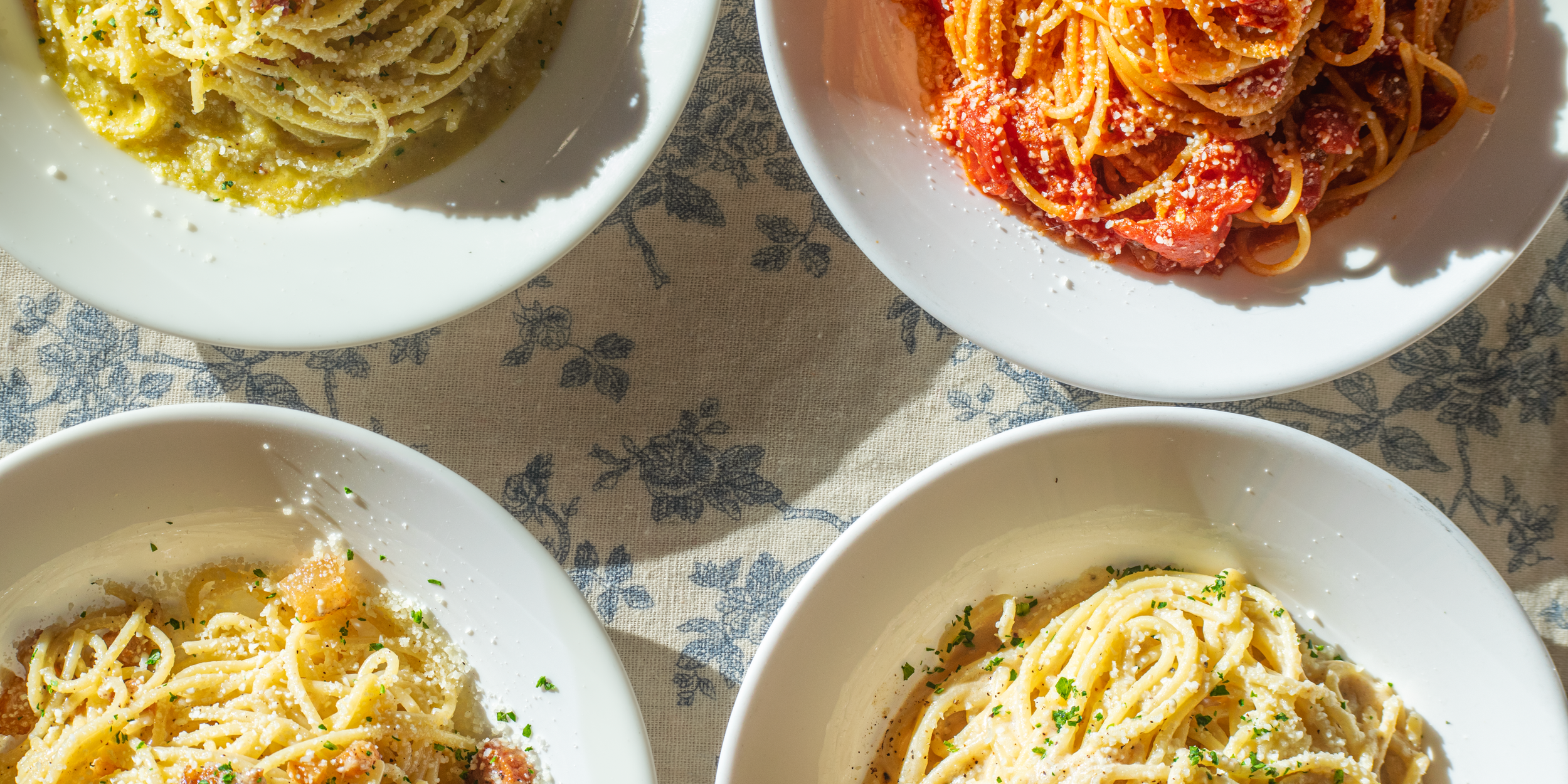
THE 4 ROMAN PASTAS
Carbonara
Carbonara is the “newest” of the Roman Pastas , introducing eggs into the mix to create a silky, creamy sauce that clings to every strand of pasta. Built on the foundation of Cacio e Pepe - with Pecorino Romano and black pepper - Carbonara adds richness with the addition of eggs and cured pork.
Its exact origins are debated: some say it was first enjoyed by coal miners (“carbonai”), while others connect its rise to post-WWII influences, when Americans introduced eggs and bacon to Roman cooking.
Our version uses pancetta in place of traditional guanciale, lending the dish a saltier flavor.
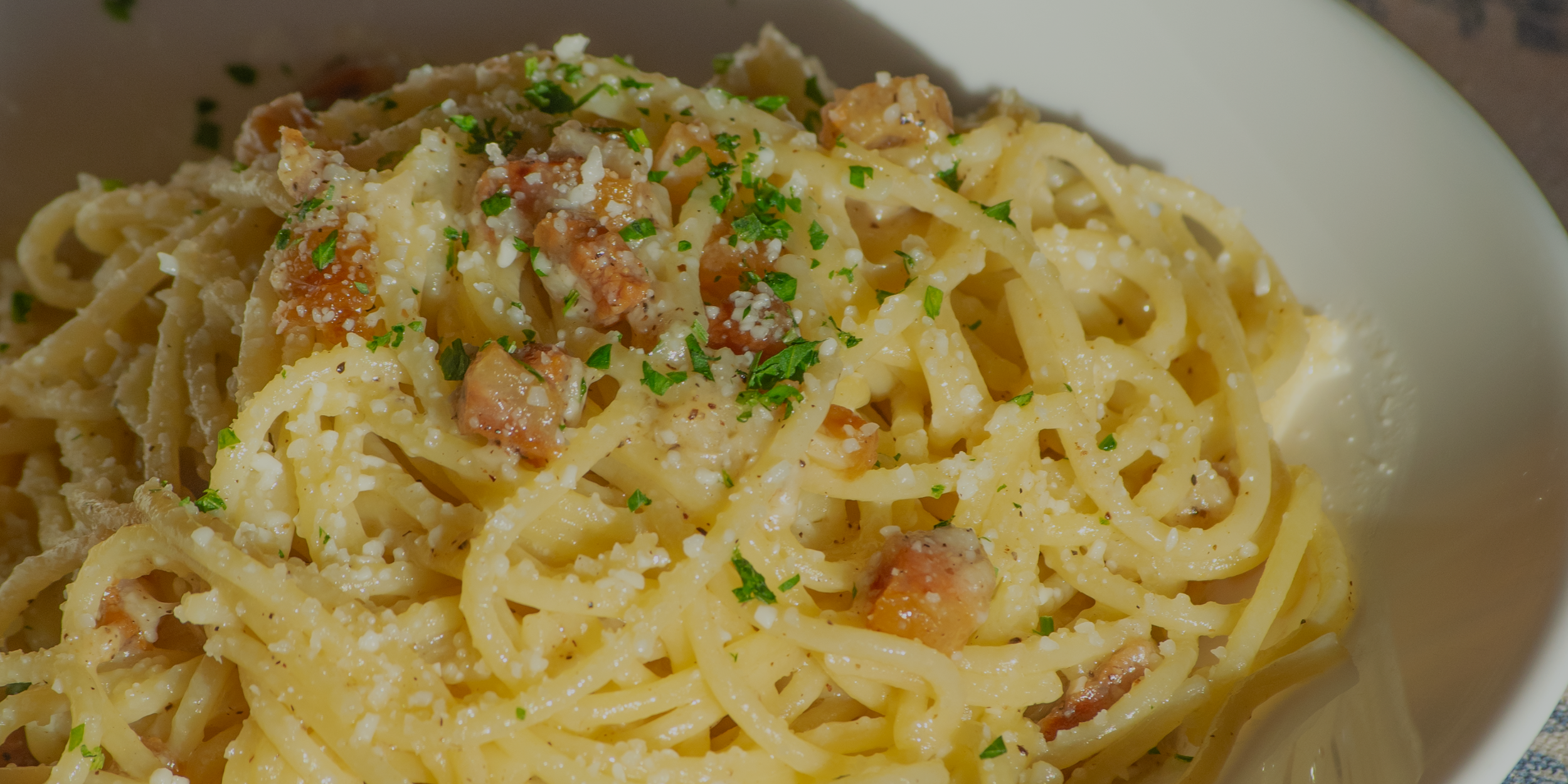
Broders’ Carbonara Recipe
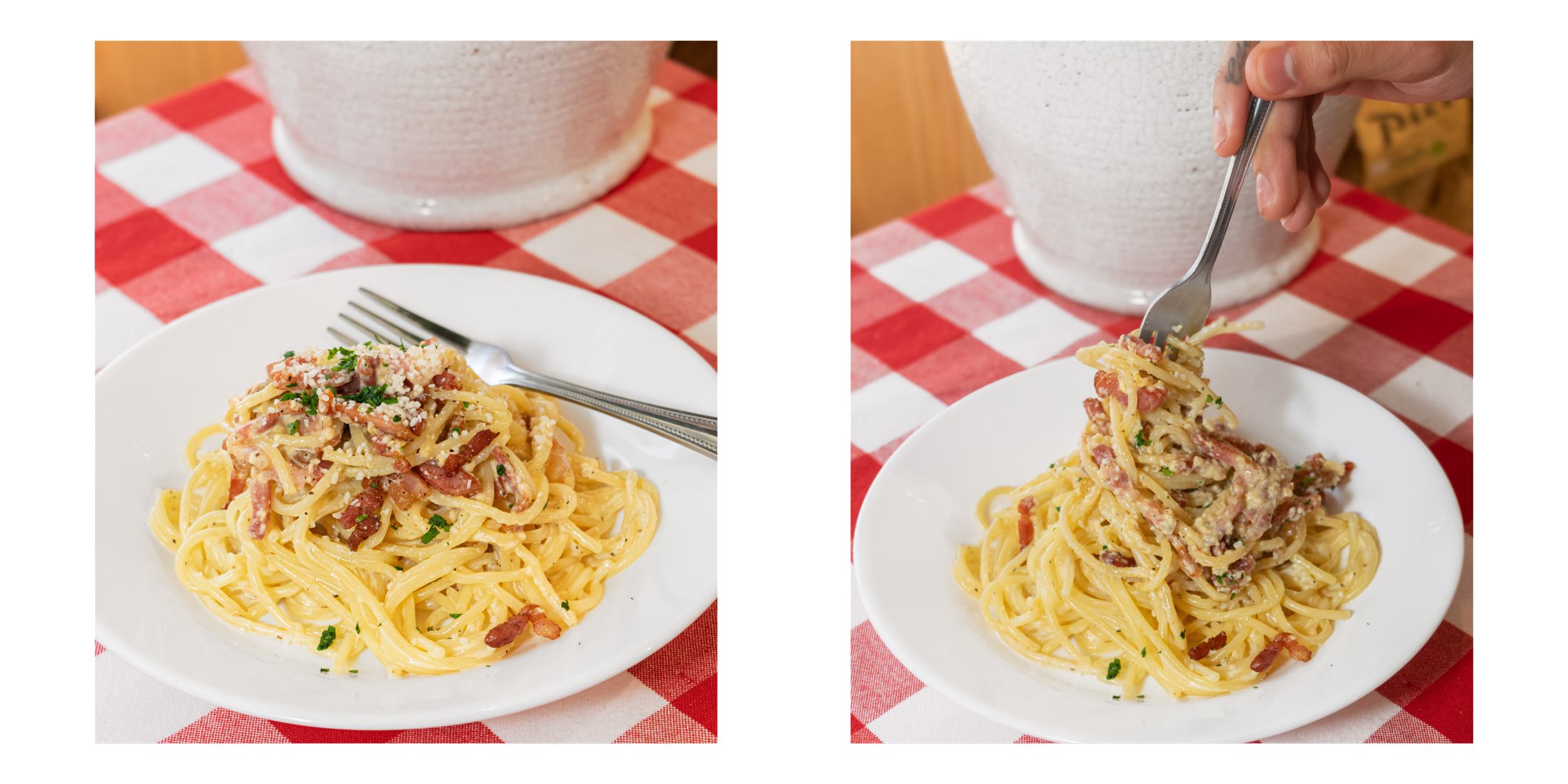
INGREDIENTS - shop pantry staples, cured meats, and imported cheeses at Broders’ Cucina Italiana!
6 oz. guanciale or pancetta, diced
4 large egg yolks
1 large egg
1 cup Pecorino Romano, grated
1 ½ tsp. black pepper, cracked
1 lb. spaghetti, bucatini, or spaghettini
1 tbsp. kosher salt, for the pasta water
DIRECTIONS
Whisk the yolks, whole egg, Pecorino Romano and half the pepper into a thick paste. Set aside.
Put the guanciale or pancetta in a cold dry pan over medium heat. Cook until rendered and crispy (6-8) minutes. Pull the pan off the heat and leave the fat in it.
Boil 4 quarts of water, salt it, and cook the pasta. Reserve a cup of pasta water before draining.
Whisk a few spoonfuls of hot pasta water into the egg and cheese mixture to temper it - this is what keeps it from scrambling.
Add the drained pasta to the guanciale (or pancetta), off the heat, and toss to coat.
Pour in the egg and cheese mixture and toss vigorously, adding splashes of pasta water until the noodles are coated and the sauce is glossy.
Serve immediately with more Pecorino Romano and the rest of the black pepper.
The Four Icons of the Roman Table
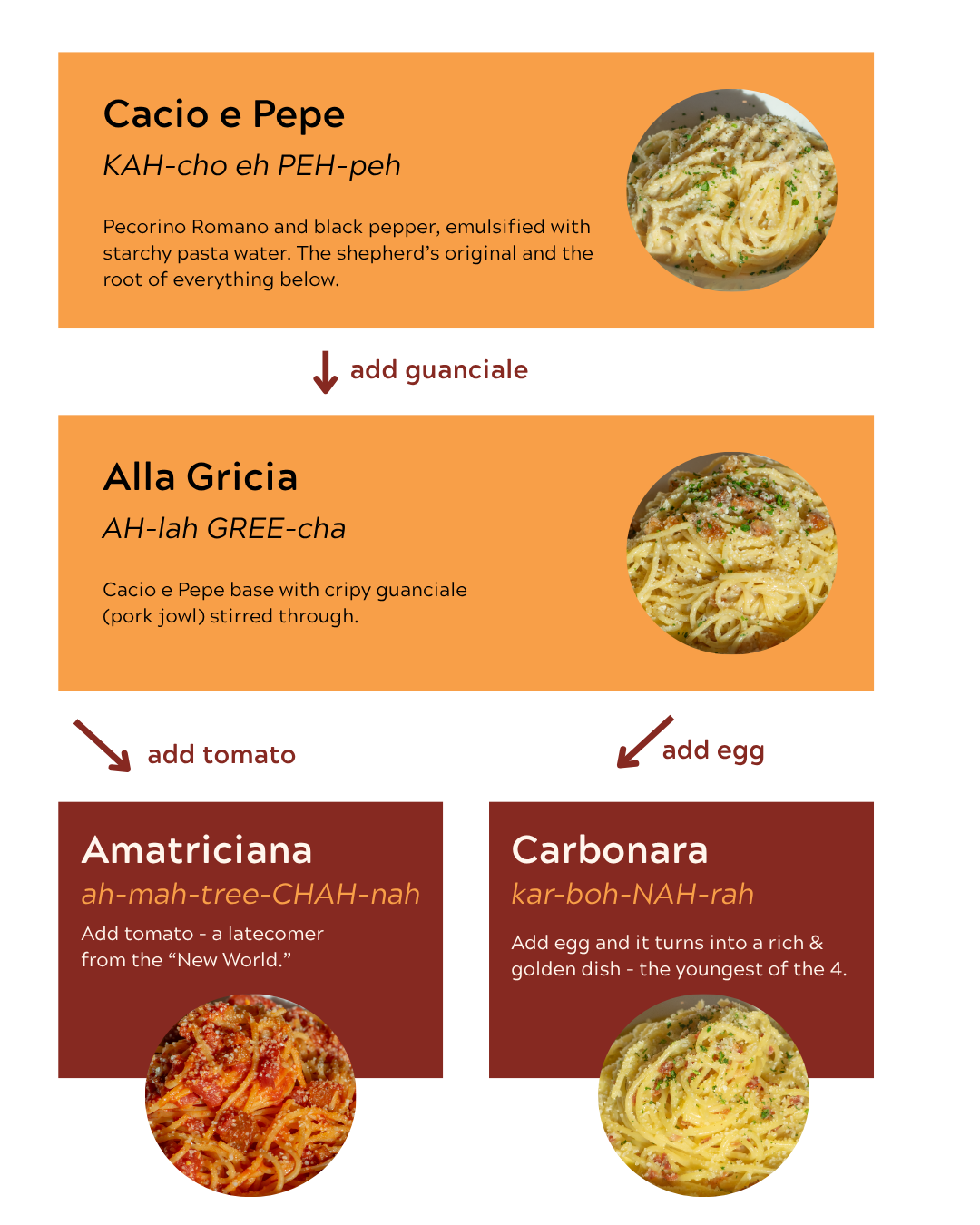
The expansion of the Roman Empire brought a boom in trade and cultural diversity to Italy – paving the way for the creation of four iconic dishes that are indisputably part of the Roman Table.
But as the saying goes, Rome wasn’t twirled in a day. These dishes were developed over the course of centuries, even millennia, as Romans were exposed to new imported ingredients, adjusted to changing lifestyles and integrated techniques brought from foreign cultures.
There are four iconic Roman Pastas all connected – playing off each other while holding their own place in the canon of Roman cuisine. Try your hand at cooking up some old world magic.
Explore Broders’ Recipes